
-
ISO Introduction
-
- Articles coming soon
-
- Articles coming soon
-
Sector Case Studies
-
- Articles coming soon
-
- Articles coming soon
-
- Articles coming soon
-
- Articles coming soon
-
- Articles coming soon
-
Resources
-
- Articles coming soon
-
- Articles coming soon
-
Preventing Certification Loss and Rebuilding a High‑Functioning Management System
Challenge / Problem
The client’s ISO 9001 certification was under immediate and serious threat.
Losing registration would have resulted in the instant termination of several key contracts, putting millions of pounds of revenue at risk.
For the second consecutive year, the organisation had received multiple major nonconformances from their UKAS approved certification body, a clear signal that the management system had effectively collapsed.
Although a management system technically existed, its effectiveness had been eroded by:
- Frequent staff changes leaving the system dormant and unmanaged.
- A complete disconnect between documented processes and actual business practice.
- Significant periods without updates or reviews.
- Excessive complexity; including an 18-page index merely to navigate the system.
- Ownership of the entire system resting solely with the Finance Director, who had neither the bandwidth nor the operational expertise to manage a manufacturing focused quality framework.
An additional non UKAS environmental system also existed, further adding to the confusion.
Client Overview
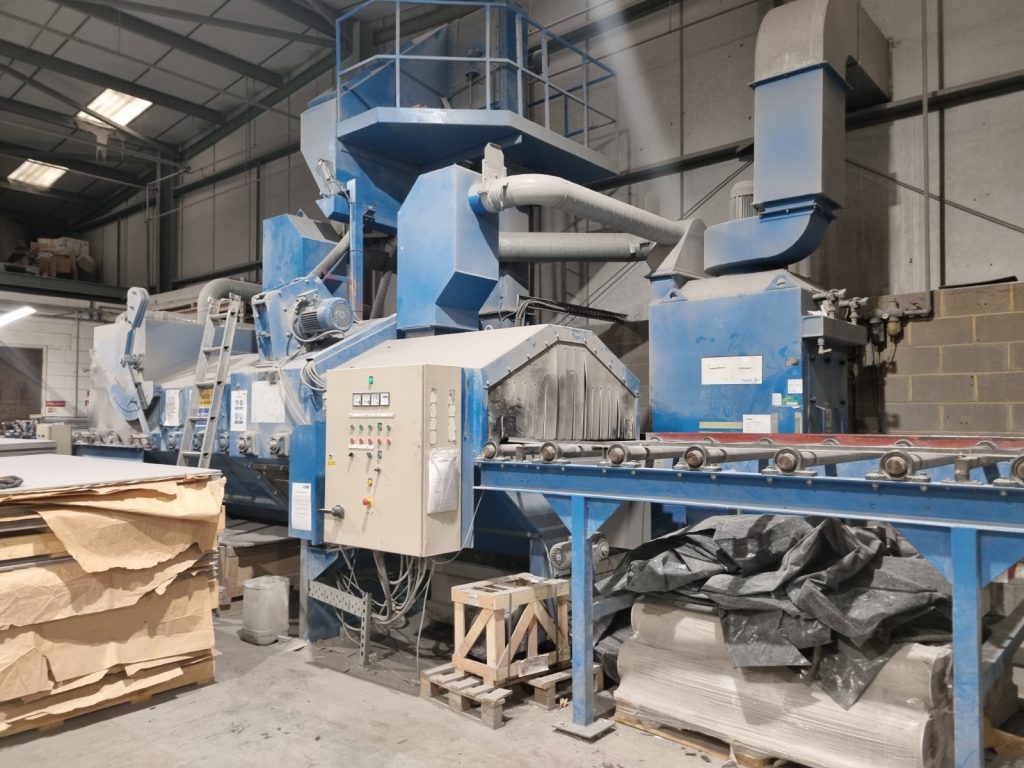
A long established, 50-year-old manufacturing company with 50 employees and an £8m turnover, owned by a Private Equity firm and supplying products to the construction industry.
Approach and Solution
The first and most urgent priority was protecting certification to safeguard revenue.
We began by conducting a full clause-by-clause audit of the management system, followed by a comprehensive management review. A clear programme of work with firm objectives and timelines was then presented to the certification body to demonstrate control and secure continued registration.
Key objectives for rebuilding the system:
- Align management system objectives directly with the strategic priorities set by the PE owners.
- Ensure the core delivery processes accurately reflected the real world activities required to produce the organisation’s two principal product lines – in plain, operational language and in a logical sequence.
- Develop KPIs for every process, specifically designed to provide early warning signals of operational and systemic issues.
- Establish clear ownership, ensuring managers and supervisors were fully accountable for both their operational processes and their contribution to the overall management system.
To achieve this, key personnel were brought together for a series of structured workshops. High level activities for each core product were mapped, forming the foundation of an integrated system diagram and core activity map.
Over the following months, detailed flowcharts and supporting processes were developed. Existing documentation was reviewed, simplified, and reintegrated only where genuinely useful, eliminating outdated material and slashing unnecessary complexity.
Outcome and Impact
Working closely with the senior leadership team, we successfully developed:
- A clear company purpose to align all processes.
- A set of strategic objectives fully understood and adopted across the organisation.
- A complete suite of KPIs for every operational process.
A KPI matrix was created and linked directly to the strategic vision. This cascaded into structured daily, weekly, monthly, and quarterly performance measures, giving the company real time visibility of both manufacturing and system health.
The result was a restored, resilient, and strategically aligned management system, one that not only protected critical revenue but also gave the business the tools to prevent future crises and drive sustainable operational improvement.