If you’re working towards ISO certification (or trying to maintain it) you’ve probably heard the term “non-conformity” thrown around.
A non-conformity simply means there’s a gap between what you’re doing and what the ISO standard requires. Think of it as the auditor’s way of saying “this doesn’t quite match up.” It could be a missing document, an incomplete process, or evidence that something isn’t working as it should.
Understanding non-conformities and knowing how to prevent them can make the certification process far less stressful.
MAJOR VS. MINOR: WHAT’S THE DIFFERENCE?
Auditors categorise non-conformities as either major or minor, and the distinction matters.
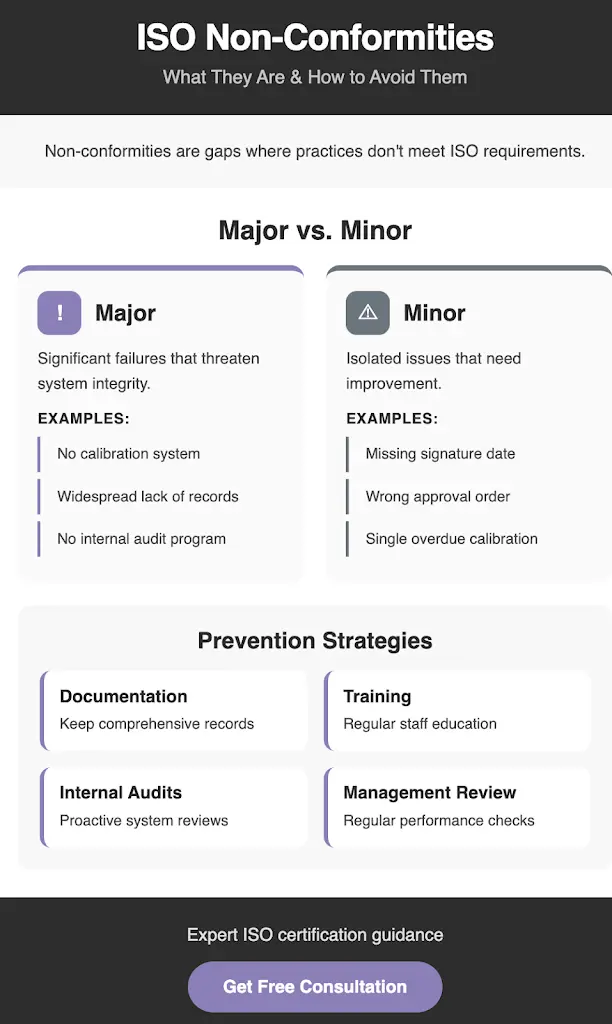
Major non-conformities are the serious ones. These are fundamental breakdowns in your management system, the kind that could affect product quality, customer satisfaction, or compliance. Examples include having no calibration system for your measuring equipment, widespread absence of training records, or failing to run internal audits when they’re required by the standard.
If you get a major non-conformity, you’ll need to address it before certification can proceed. It’s not the end of the world, but it does require immediate attention and corrective action.
Minor non-conformities are less severe. They’re isolated incidents or small lapses that don’t fundamentally compromise your system. Maybe one training record is missing a signature date, or approval signatures ended up in the wrong order on a document. Perhaps a single piece of equipment missed its calibration by a few days.
While minor issues won’t stop your certification, they’re still worth taking seriously. Multiple minor non-conformities in the same area can add up, eventually escalating into a major problem.
HOW TO STAY AHEAD OF NON-CONFORMITIES
Prevention really is better than correction when it comes to ISO compliance.
Here’s what actually works:
- Keep your documentation solid. Every procedure, training session, and process outcome should be recorded and easy to find. Remember the auditor’s golden rule: if it’s not documented, it didn’t happen. Make sure your records are version-controlled and accessible to the people who need them.
- Invest in regular training. When your team understands why procedures exist, not just what they are, they’re far more likely to follow them consistently. Document the training, of course, but focus on building genuine competency rather than just ticking boxes.
- Run internal audits before the official ones. Think of these as practice runs that help you spot weaknesses before external assessors arrive. The key is treating findings as opportunities to improve, not reasons to assign blame. A good internal audit programme is worth its weight in gold.
- Make management reviews meaningful. These aren’t just formalities to schedule once a year. Regular reviews of your management system’s performance help you catch emerging issues early, allocate resources where they’re needed, and demonstrate leadership commitment to the process.
Also read: ISO Certification Lifecycle Explained
THE BOTTOM LINE
Non-conformities aren’t disasters, they’re feedback. They show you where your management system has room to grow. The organisations that handle ISO certification best are the ones that build quality and compliance into their daily operations rather than treating it as a separate compliance exercise.
By understanding what auditors look for and building robust systems from the start, you can approach certification with confidence rather than anxiety. And if you do get a non-conformity? Address it systematically, learn from it, and move forward. That’s exactly what the process is designed to help you do.
NEED HELP WITH YOUR ISO CERTIFICATION?
At ISO Consultants, we guide businesses through the entire process, from initial preparation to maintaining your certification long-term. We’ll help you build systems that work for your business, not against it.
Ready to get started? Book a free consultation to discuss your certification goals.